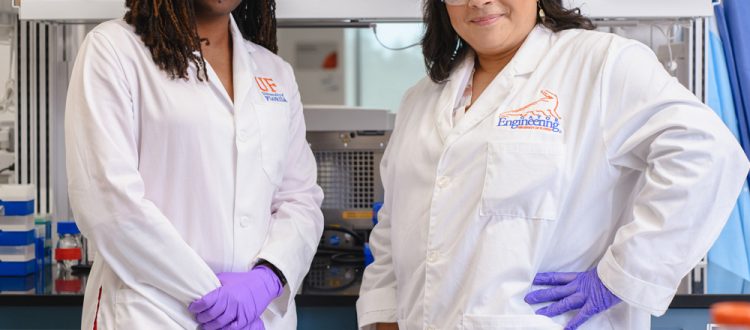
from UF Engineering For those who have made a trip to a doctor or clinic during the oncoming flu season, the most nagging concern is whether their symptoms are indicative of the garden-variety bug that is making the rounds in the workplace or a potential COVID-19 infection. As researchers scramble... Read More
By Brad Buck UF/IFAS BALM, Fla. — Kevin Wang trained as an engineer and gave little thought to agriculture. But then, life took a few turns. Born in Tianjin, China, Wang was raised in an urban area and went to the China Agricultural University in Beijing. He lived in Beijing... Read More
from UF News Social psychologist Matt Baldwin wakes up thinking about the yellow and green boxes of Wordle, the free, once-a-day word game that has gained millions of fans since its public launch in October. Unlike most players, though, he understands why our brains crave it. Baldwin, a University of Florida professor,... Read More
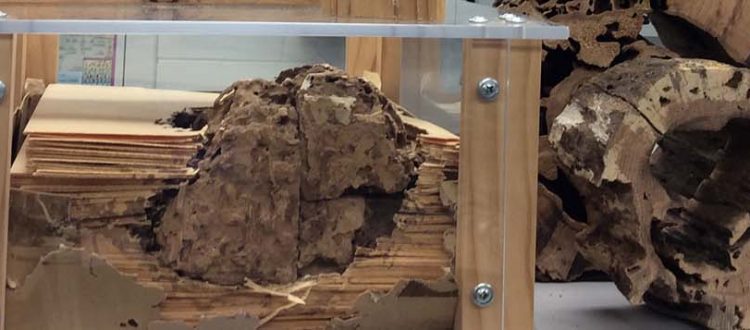
By Lourdes Mederos UF/IFAS DAVIE, Fla – Taking an extended look inside a subterranean termite colony is a rare and almost non-existent opportunity unless you raise one. But scientists like Thomas Chouvenc rear colonies from a king and queen, allowing them to produce thousands of eggs that grow to full maturity. In... Read More
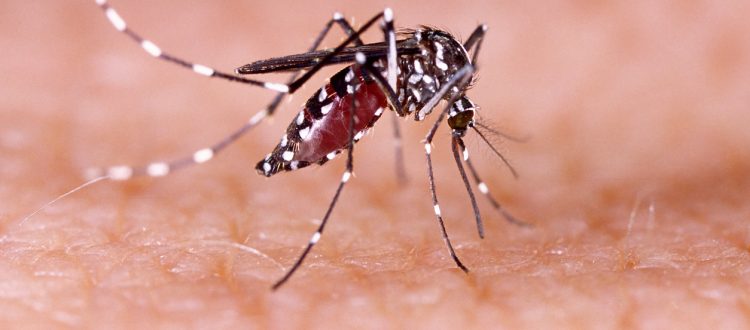
DeLene Beeland UF EPI New research by a team of University of Florida investigators, and others, provides evidence that host immunity drives evolution of the dengue virus. The work, published Nov. 18 in Science, retrospectively analyzes two decades of dengue virus genetic variation from Thailand, alongside population-level measures of infection... Read More
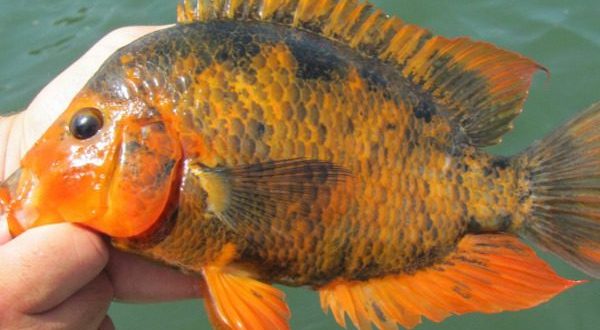
By Brad Buck UF/IFAS RUSKIN, Fla. — Nonnative fish eat away at the banks of rivers and lakes – one reason University of Florida researchers caution people not to release unwanted fish. People sometimes put fish from their aquariums into nearby waterways. Each year, nonnative species can cause $120 billion... Read More
Lauren Barnett UF CLAS Hippopotamuses can eat nearly 100 pounds of food daily — and, as a result, they fill the pools where they spend much of their lives with huge amounts of poop. All that excrement, new research has found, turns the pools into extensions of the hippos’ guts,... Read More
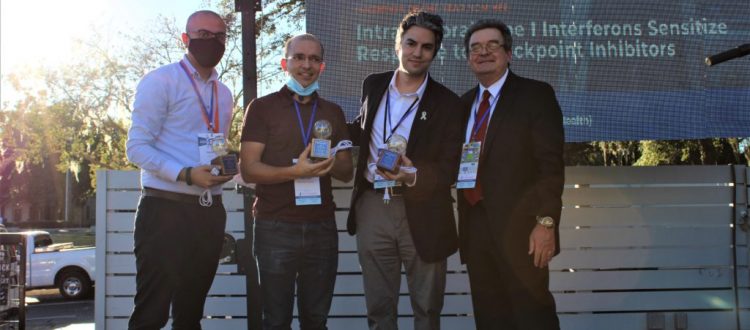
by Maja Aganovic UF Innovate Immunotherapy is a hot topic of conversation when it comes to cancer treatment. Pediatric oncologist Dr. Elias Sayour and his team have found a way to make a hot tumor, their way to make immunotherapy, an alternative to chemotherapy, more effective. “I spend the bulk of my... Read More
by Brad Buck UF/IFAS Tempted by the tangy taste of tomato juice? Consumers may prefer a product sold from grocery store shelves over a minimally pasteurized refrigerated product, but only by a small margin, new University of Florida research shows. Researchers at the UF Institute of Food and Agricultural Sciences made... Read More
by Emily Cardinali UF News Diseases impact different populations with varying prevalence, which is reflected in health disparities that are seen for illnesses like lupus, cancer, and cardiovascular disease. To create effective medical treatments, researchers need representative population samples. Even though disease impacts everybody, medical research samples are often not... Read More